09/04/2026
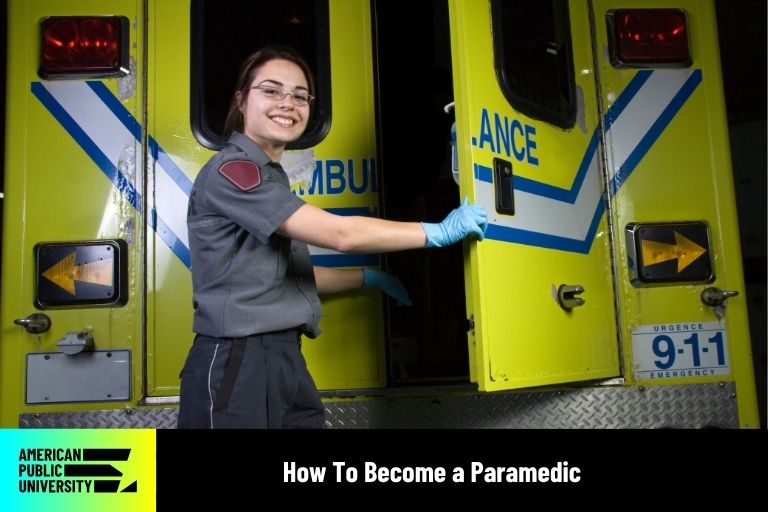
Paramedics provide advanced emergency medical care for people experiencing injuries, illnesses, and other life-threatening situations. They assess patients, administer treatments, and work alongside other healthcare professionals to deliver care before and during transport to a medical facility.
Many people who become paramedics follow a path that includes earning a high school diploma or GED, obtaining EMT certification, completing an accredited paramedic education program, and meeting applicable national and state licensure or certification requirements. Understanding the education, training, and credentialing process can help prospective students prepare for each step toward becoming a paramedic.
Steps To Become a Paramedic
A typical path into paramedicine follows a sequence from foundational education to EMT training, paramedic school, national testing, and state-level authorization to practice. In many cases, students first complete a high school diploma or GED, become EMT-Basic certified, enroll in a paramedic program, finish classroom, lab, clinical, and field requirements, and then apply for National Registry and state licensure steps.
Educational pathways vary based on a student's goals and chosen program. Many students complete a certificate or associate degree program to meet paramedic education requirements, while others choose to continue their education by pursuing a bachelor's degree in a related field after becoming licensed. Because timelines and educational pathways differ, it is helpful to understand the available options before beginning your training.
Entry Requirements for Paramedic Training
Most students begin with a high school diploma or GED, which is a standard starting point for EMT and paramedic education pathways. Prehealth coursework, such as anatomy and physiology, can be helpful because paramedic training builds on the medical terminology, body systems, and patient assessment concepts introduced in those subjects.
In many training pathways, students are expected to obtain EMT-Basic certification before entering a paramedic program. This step helps establish baseline emergency care knowledge before advancing to more complex paramedic-level instruction.
What to Expect During Paramedic Training
Paramedic training typically includes classroom instruction, lab practice, clinical rotations, and field internships. Classroom and lab components often cover advanced airway management, cardiology, trauma care, pharmacology, medical emergencies, and patient assessment, along with hands-on skills practice in controlled training settings.
Clinical rotations typically place students in healthcare settings such as emergency departments, labor and delivery units, operating rooms, intensive care units, or other approved sites, depending on the program’s structure and partnerships.
Field internship requirements commonly include supervised ambulance or prehospital hours where students apply skills in live patient-care settings under professional oversight.
Because hour requirements and documentation standards can affect graduation and exam eligibility, students should track clinical and field internship hours carefully throughout the program.
Types of Paramedic Programs
Students interested in becoming a paramedic can pursue several educational pathways depending on their experience, academic goals, and long-term plans. Common options include certificate programs, associate degree programs, and bachelor's degree programs related to emergency services or public health. Each pathway offers different benefits and timelines, so students should compare program requirements carefully before enrolling.
Certificate Programs
Certificate programs focus primarily on the technical knowledge and clinical skills required for paramedic practice. They are often designed for students who already meet prerequisite requirements, such as EMT certification, and want a direct route to completing paramedic training. Because these programs concentrate on profession-specific coursework, they are often completed more quickly than degree programs.
Associate Degree Programs
Associate degree programs combine paramedic training with general education coursework in subjects such as communication, mathematics, and science. This broader curriculum may appeal to students who want to earn a college degree while completing the education needed to pursue paramedic licensure. Students who are interested in healthcare beyond EMS may also consider an associate degree in public health or a related field to build foundational knowledge in community health and healthcare systems.
Bachelor's Degree Programs
Although a bachelor's degree is not typically required to become a paramedic, some professionals choose to continue their education after completing paramedic training. A bachelor's degree in emergency and disaster management, public health, or healthcare administration can broaden a student's understanding of healthcare systems, emergency preparedness, leadership, and community health.
While these degrees do not replace paramedic education or licensure requirements, they may complement EMS experience for students who are interested in expanding their academic background or preparing for leadership, administrative, or emergency management roles.
Admission Requirements for Paramedic Programs
Admission requirements vary, but common prerequisites include current CPR credentials, EMT certification, immunization records, and background checks. Some programs may also require drug screening, health documentation, or minimum academic standards before a student can begin clinical training
Applicants should review admissions pages carefully and prepare any required entrance exams or placement materials on time. Because schools may structure prerequisites differently, students should verify the exact checklist with each program they are considering.
National Registry Certification and State Paramedic Licensure
The National Registry of Emergency Medical Technicians plays a major role in paramedic certification by providing national certification pathways and examination standards. Students commonly prepare for the NREMT cognitive exam through structured review, timed practice, and repetition of core clinical knowledge areas.
Psychomotor expectations have historically focused on hands-on skill performance, but students should rely on the current NREMT handbook and their state EMS office for the latest testing structure and requirements. National Registry certification and state licensure are related but not identical, so students should check the rules in the state where they plan to practice before assuming one automatically satisfies the other.
Maintaining Your Paramedic License Through Continuing Education
National Registry recertification for paramedics is tied to ongoing competency and continuing education requirements, with recertification generally occurring on a two-year cycle. Because rules and acceptable education categories may change, paramedics should track continuing education credits methodically and confirm current requirements through official sources.
Some professionals also pursue specialty certifications in areas such as advanced cardiac care, pediatric emergency care, or critical care transport, depending on role expectations and employer preferences. These certifications may expand knowledge or support professional development, but they do not guarantee employment outcomes and should be evaluated based on local demand and career goals.
Transitioning from EMT to Paramedic
Some students gain EMT work experience before or during paramedic training, which can help them become more familiar with patient care environments and EMS operations. When applying for paramedic roles, it is helpful to tailor a resume so it clearly highlights EMT experience, clinical rotations, field internship hours, and relevant certifications.
Practical interviews, scenario-based questions, and ride-along evaluations may also be part of the hiring process in some settings. Because hiring practices vary by employer and region, students should review local job postings to understand how organizations describe entry-level expectations.
Next Steps to Becoming a Paramedic
Becoming a paramedic requires planning, education, and hands-on training. Although specific requirements vary by state, most students begin by earning a high school diploma or GED, obtaining EMT certification, completing a paramedic education program, and meeting applicable national and state licensure or certification requirements.
Understanding the education and training process can help you prepare for each stage of the journey. Whether you are just beginning to explore EMS careers or are ready to take the next step, building an educational foundation can help you prepare for the responsibilities of paramedic practice.
This pathway is best understood as a general roadmap rather than a guarantee of timing or employment. Actual program length, licensure steps, costs, and job outcomes vary based on state requirements, individual performance, market conditions, and employer needs.
Frequently Asked Questions and Resources About Becoming a Paramedic
Do EMTs and paramedics have the same scope of practice?
No. EMTs and paramedics are both part of emergency medical services, but paramedics are trained for more advanced assessment, interventions, and medication-related responsibilities than EMTs.
Do I need National Registry certification to become licensed?
It depends on the state. Many states use National Registry certification within their licensure process, but state EMS rules vary and should always be checked directly.